The Complete E-Waste Recycling Process: How Electronic Waste Really Gets Recycled

You probably have a drawer at home that you avoid opening. It's full of things like old phone chargers, a laptop with a cracked screen, a router you stopped using, and maybe a speaker or printer that quit working years ago. Most of us have an unofficial graveyard of electronics sitting in a drawer, a cupboard, or a garage shelf, not quite trash, not quite useful, just sitting there. And the reason it's there is simple: we don't really know what happens next. Do you throw it in the bin? Is that even legal? Does it actually get recycled, or does it just get shipped somewhere and forgotten? Here's the good news: there is an actual answer, and it's more interesting than you'd expect. The e-waste recycling process isn't a single mysterious step where old electronics disappear into a shredder and come out as gold bars (though, spoiler, gold is involved). It's a surprisingly precise, multi-stage operation that looks a lot more like a detective's investigation than a demolition job. Every device gets studied, sorted, dismantled, and mined for value before anything is actually thrown away. Let's walk through that process in full, and along the way, understand what electronic waste management really involves and how you can dispose of your own e-waste responsibly.
What Actually Counts as E-Waste?
"E-waste" sounds like it should mean broken electronics, but the definition is a lot broader than most people assume. Electronic waste covers pretty much anything with a plug, a battery, or a circuit board that's reached the end of its usable life.
That includes the obvious suspects, phones, laptops, tablets, and TVs, but also things people rarely think about:
- Kitchen appliances (microwaves, mixers, kettles)
- Printers and scanners
- Routers, modems, and networking gear
- Batteries and power banks
- Cables, chargers, and adapters
- Office equipment like servers and monitors
- Even electronic toys
If it has a circuit board humming away inside it, it's part of the e-waste conversation. And there's a lot of it. Globally, we generate tens of millions of tonnes of electronic waste every single year, and a huge share of it never gets recycled at all. It just sits in landfills, slowly leaking things like lead, mercury, and cadmium into soil and groundwater.
That's exactly why electronic waste management has become less of a niche environmental issue and more of an urgent, practical one.
Why Should You Actually Care About Waste Management for Electronic Waste?
Fair question. It's easy to assume one old device in a landfill doesn't matter. But here's the twist that surprises most people: your "worthless" old electronics are actually a surprisingly rich source of valuable material.
A single tonne of discarded circuit boards contains far more gold than a tonne of gold ore mined straight from the earth. Circuit boards are laced with gold, silver, palladium, and copper. Batteries contain lithium and cobalt. Even the plastic casing can often be reclaimed and reused.
So e-waste isn't just an environmental hazard sitting in a bin, it's also a resource sitting in the wrong place. That's the whole logic behind e-waste management: instead of mining the earth for new metal, we "mine" the electronics we've already made. It's called urban mining, and it's a big part of why the e-waste recycling process matters as much for economics as it does for the planet.
How Is E-Waste Recycled? The Process, Step by Step
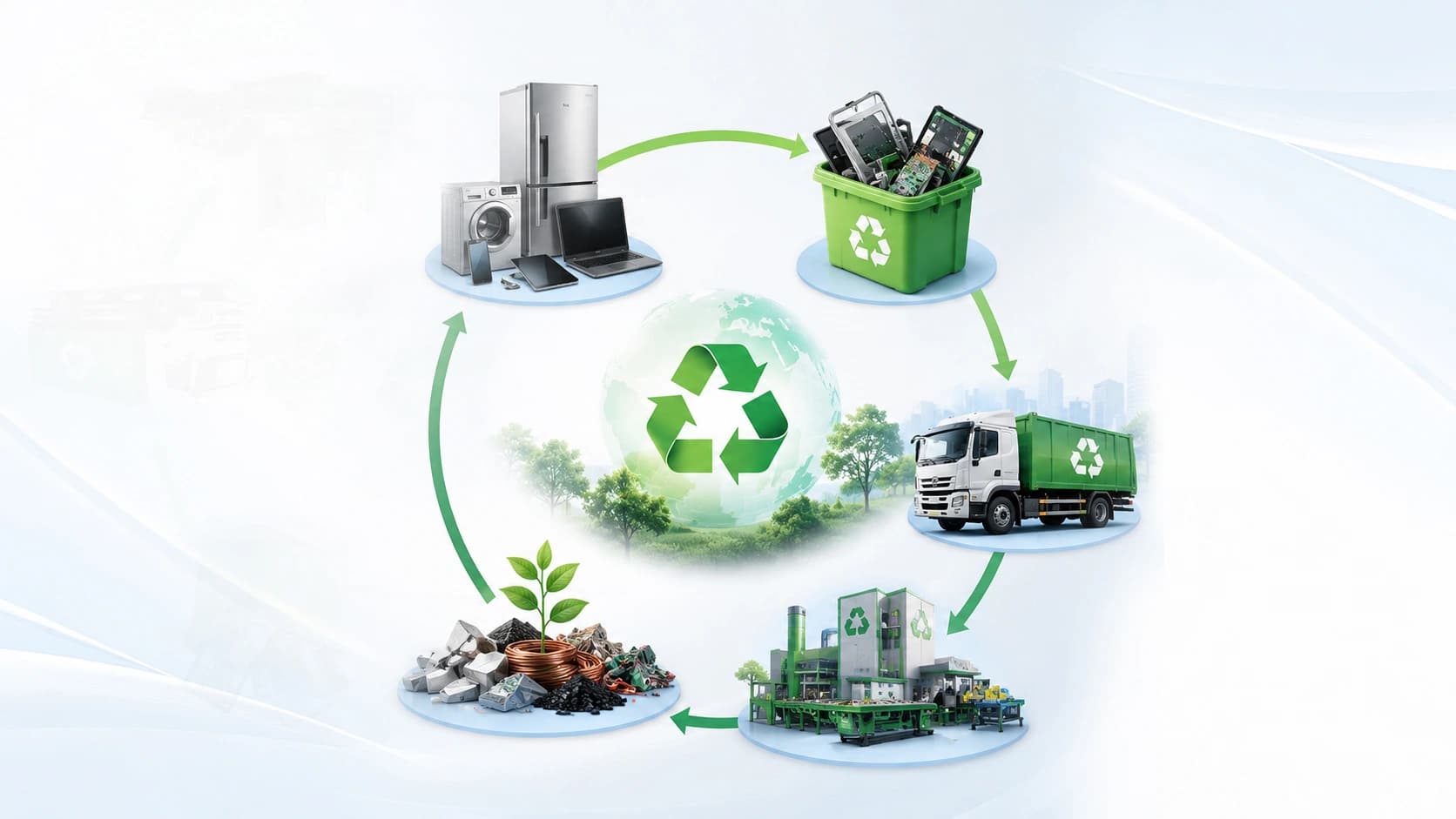
This is the part most people are genuinely curious about, and it's more methodical than you'd think. Here's what actually happens once a device enters the electronics recycling process.
Collection
It starts with getting the device out of your drawer and into the system, through a drop-off point, a scheduled pickup, an e-waste collection drive, or a certified recycler. This is also the step where "e waste disposal near me" searches usually come in, because getting material into the right hands is the single most important part of the entire process. A device that never enters the formal recycling system can't be recycled properly, no matter how good the technology downstream is.
Sorting and Assessment
Once collected, devices are sorted by type and condition. Some units, especially newer ones with minor faults, get pulled aside for potential refurbishment and resale instead of being broken down. Everything else is assessed to understand what it's made of and what can realistically be recovered from it.
Manual Dismantling
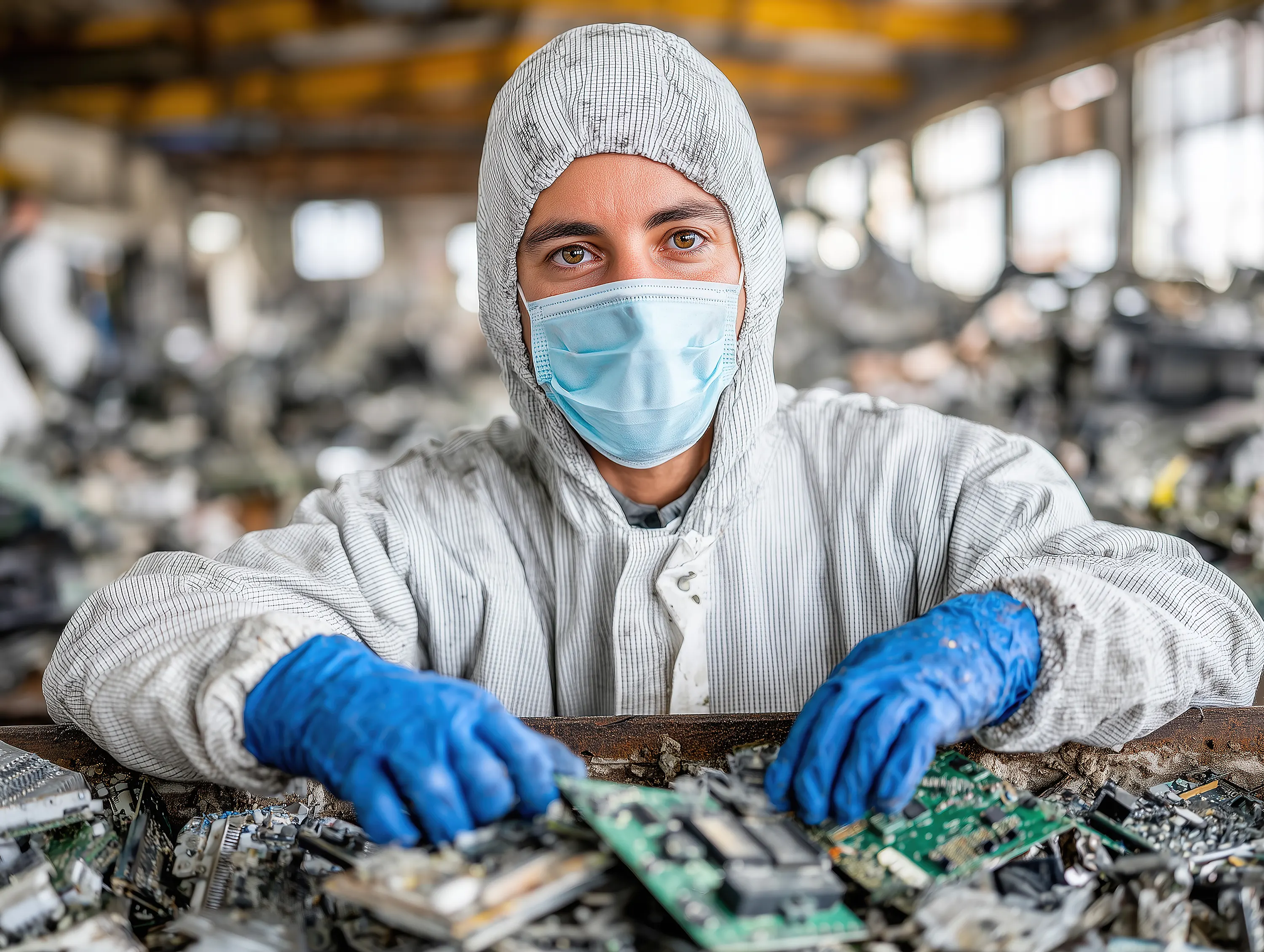
Here's where things get genuinely hands-on. Skilled workers manually take devices apart, separating batteries, circuit boards, screens, and casings. This step matters because certain components, like batteries, are hazardous if crushed carelessly, and certain parts, like circuit boards, are far too valuable to risk damaging in bulk processing.
Mechanical Shredding
The remaining material is fed into industrial shredders that break everything down into smaller fragments. This is the loud, dramatic part of the process most people picture when they think of recycling, but it's really just preparation for the more precise separation that comes next.
Separation
Shredded material passes through a series of separation techniques:
- Magnetic separation pulls out ferrous metals like steel.
- Eddy current separation removes non-ferrous metals like aluminium.
- Density-based separation splits plastics, glass, and metals by weight.
By the end of this stage, what started as one messy pile of shredded electronics has been sorted into distinct material streams: metal, plastic, glass, and the real prize, circuit board material rich in precious metals.
Metal Recovery and Refining
The precious metal-bearing material goes through chemical processing, such as smelting, leaching, or precipitation, to extract gold, silver, palladium, platinum, and copper. These metals are then refined to high purity and sent back into manufacturing supply chains, sometimes ending up in brand new electronics within months.
Safe Disposal of Hazardous Residue
Not everything can be recovered. Certain materials, like specific battery chemicals or trace toxic residues, need to be handled and disposed of according to strict environmental regulations, so they never make it into soil or water systems.
That's the full arc of the electronic waste recycling process: from a forgotten drawer to raw material precise enough to build the next generation of electronics.
Electronic Waste Management Is Bigger Than Just Recycling
Here's something worth knowing: recycling is actually the last step in a hierarchy, not the whole strategy. Good e waste management generally follows a "reduce, reuse, recycle" order of priority.
Reduce
Buying only what you need, and choosing durable devices over disposable ones.
Reuse
Repairing, donating, or reselling devices that still work, rather than replacing them outright.
Recycle
Only once a device is genuinely beyond repair or reuse, sending it through the formal e waste management process.
There's also an important distinction between formal and informal recycling. Formal e-waste management, through licensed recyclers and refiners, follows environmental and safety regulations, uses controlled processes, and often provides certified data destruction for devices that stored personal or business information. Informal recycling, on the other hand, often happens through unregulated scrap dealers, sometimes involving unsafe manual burning or acid processing to extract metals, a practice that recovers some value but causes serious harm to workers and the environment.
Choosing formal waste management for electronic waste isn't just a technicality. It's the difference between metal recovery done safely, and metal recovery done at someone's expense.
A Few Myths Worth Clearing Up
"My old device is basically worthless, so it doesn't matter where it ends up."
Actually the opposite: small electronics like phones and routers are some of the densest sources of recoverable precious metal, pound for pound, compared to almost anything else in the waste stream.
"Recycling electronics is basically the same as recycling plastic or paper."
Not even close. The electronic waste recycling process involves far more precision, separating dozens of different materials, some hazardous, some extremely valuable, often within the same small device.
"If I throw it in the regular bin, someone will sort it out eventually."
In most cases, electronics that go into general waste end up in landfill, not in a recycling facility. Getting e-waste into the right stream requires an actual, deliberate drop-off or pickup. It doesn't happen automatically.
How to Dispose of Your E-Waste Responsibly
If you've got a drawer, a garage, or a closet full of old electronics, here's the practical part.
Find a Certified Recycler
Look for certified e-waste recyclers or collection drives rather than handing devices to informal scrap collectors. A quick search for e waste disposal near you will usually surface certified drop-off points, pickup services, or collection events in your area.
Wipe Your Data First
Factory reset phones and laptops, or ask your recycler about certified data destruction if the device held sensitive information.
Handle Batteries With Care
Don't remove batteries yourself unless you know what you're doing. Damaged lithium batteries can be a serious fire risk, so leave that step to professionals.
Consider Reuse Before Recycling
If a device still functions, donation or resale is a better first option than recycling.
Bundle Your E-Waste
Cables, old routers, dead batteries, broken headphones: collect it all and drop it off together rather than trickling it out one item at a time.
Responsible electronic waste disposal doesn't have to be complicated. It just has to be intentional: a five minute decision to route your old device to the right place instead of the nearest bin.
The Bigger Picture
Every device that goes through a proper e-waste recycling process is one less item leaking toxins into a landfill, and one more source of gold, silver, and copper that doesn't need to be freshly mined out of the earth. It's a small decision on your end, a drop-off, a scheduled pickup, a five minute search for a certified recycler, that plugs into a much bigger system working to keep valuable material in circulation instead of buried underground.
So the next time you're staring at that drawer of old electronics, you'll know exactly what's waiting on the other side of recycling: a precise, surprisingly high-tech process that turns forgotten devices back into the raw material for tomorrow's technology.