Lithium-Ion Battery Recycling in India: A Guide to the Future of Battery Waste Management

India is rapidly transitioning toward electric mobility, renewable energy, and sustainable manufacturing, driving unprecedented demand for lithium-ion batteries. From electric vehicles (EVs), smartphones, laptops, and power banks to renewable energy storage systems, lithium-ion batteries have become an essential part of modern technology and everyday life. However, as the use of lithium-ion batteries continues to grow, a critical question is becoming increasingly important: What happens to lithium-ion batteries when they reach the end of their useful life? This is where lithium-ion battery recycling in India plays a crucial role. Proper battery recycling and battery waste management can prevent valuable resources from being lost while helping businesses and industries manage end-of-life batteries responsibly. Lithium-ion battery recycling is no longer just about waste disposal. It is becoming an important component of India's circular economy, supporting resource recovery, critical mineral recovery, sustainable manufacturing, and the development of a more resilient battery supply chain. Through responsible lithium battery recycling, valuable materials such as lithium, nickel, cobalt, copper, aluminum, and other battery materials can be recovered and potentially returned to the manufacturing cycle. This helps reduce waste, improve resource efficiency, and reduce dependence on newly extracted raw materials. As India's EV industry, battery manufacturing ecosystem, and energy-storage market continue to expand, the demand for efficient and responsible EV battery recycling and lithium-ion battery recycling solutions is expected to grow significantly. The future of India's battery ecosystem depends not only on producing more batteries but also on building a responsible system to collect, recycle, and recover value from batteries at the end of their life.
What Is Lithium-Ion Battery Recycling?
Lithium-ion battery recycling is the process of collecting, sorting, safely dismantling, and processing used or end-of-life lithium-ion batteries to recover valuable materials for reuse. As the use of electric vehicles, energy storage systems, smartphones, laptops, and other battery-powered devices continues to grow, battery recycling in India is becoming increasingly important for responsible battery waste management and resource recovery.
Depending on the battery chemistry, battery condition, and recycling technology, several valuable materials can be recovered from used lithium-ion batteries, including:
- Lithium
- Nickel
- Cobalt
- Copper
- Aluminium
- Graphite
- Other valuable battery materials
Through proper lithium-ion battery recycling, these recovered materials can be processed and potentially returned to the industrial supply chain instead of being lost through improper disposal. This helps reduce battery waste, conserve natural resources, support critical mineral recovery, and strengthen the supply chain for new battery manufacturing.
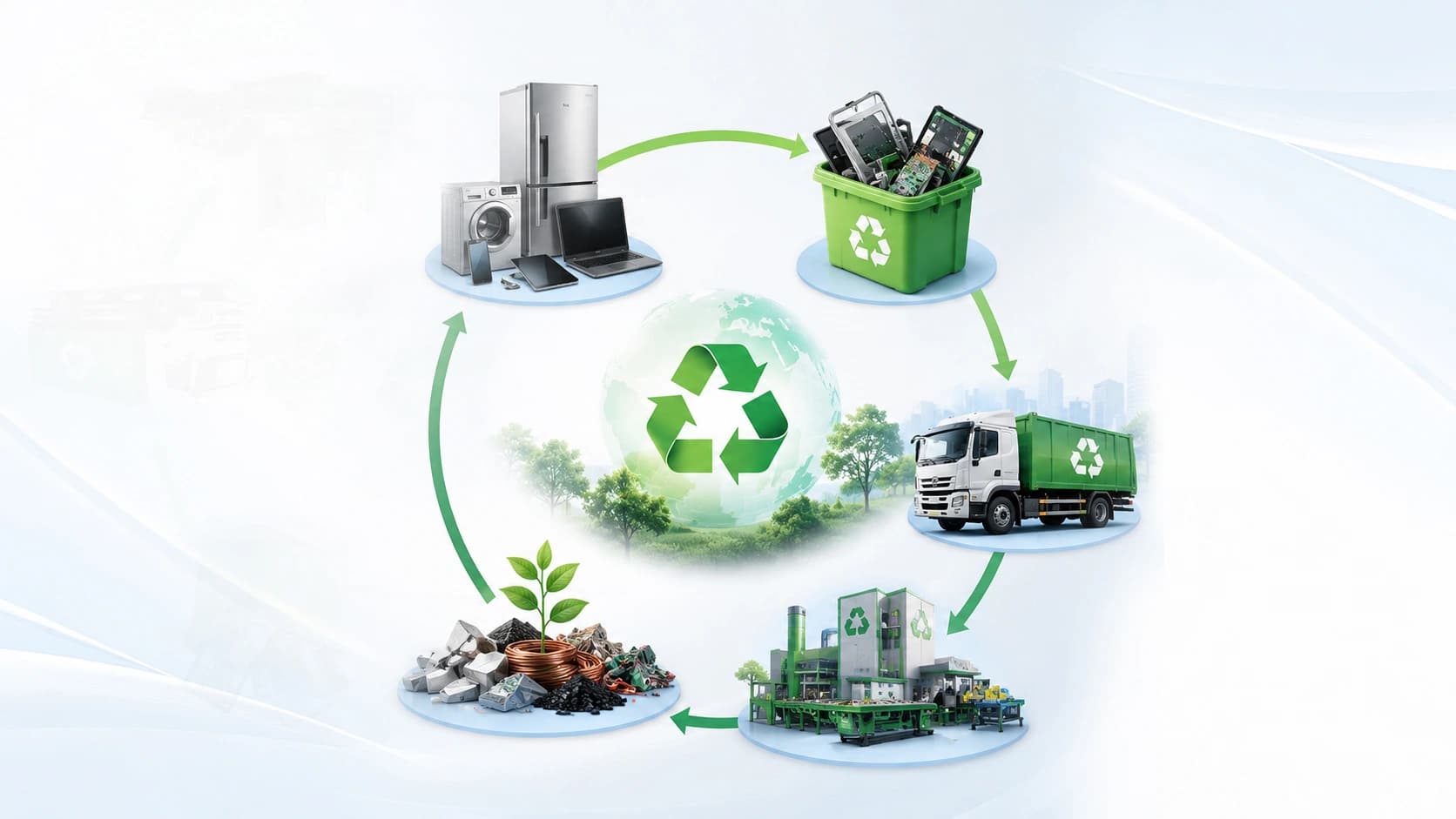
In simple terms, the lithium-ion battery recycling process follows a circular pathway:
Battery Manufacturing → Battery Use → Collection → Sorting & Dismantling → Recycling → Material Recovery → Reuse in Manufacturing → New Battery or Product
This approach is at the heart of the circular economy. Rather than treating end-of-life batteries as waste, battery recycling focuses on recovering their remaining value and keeping important materials in circulation for as long as possible.
As India's electric mobility and energy-storage sectors continue to expand, efficient lithium battery recycling and responsible battery waste management will play an increasingly important role in building a sustainable and resource-efficient battery ecosystem.
Why Is Lithium-Ion Battery Recycling Important in India?
The demand for lithium-ion batteries is growing rapidly with the expansion of:
- Electric vehicles (EVs)
- Electric two-wheelers and three-wheelers
- Smartphones, laptops, and portable electronics
- Renewable energy storage
- Battery energy storage systems (BESS)
- Industrial applications
As more batteries enter the market, an increasing number will eventually reach the end of their useful life. This makes battery waste management and lithium-ion battery recycling in India increasingly important for both environmental protection and resource recovery.
India needs stronger battery collection, traceability, recycling infrastructure, and material recovery systems to manage this growing waste stream. Effective lithium battery recycling can help recover valuable materials while supporting a more sustainable and circular battery ecosystem.
The Hidden Value Inside Used Lithium-Ion Batteries
An end-of-life battery may no longer be suitable for its original application, but it can still contain valuable resources. Depending on the battery chemistry and recycling process, materials such as lithium, nickel, cobalt, copper, aluminum, and graphite can be recovered.
These recovered materials can serve as secondary raw materials, reducing the need for completely new resources. This process is often described as urban mining—recovering valuable materials from products already in circulation.
For India, EV battery recycling and lithium-ion battery recycling can therefore support resource efficiency, strengthen material supply chains, and reduce dependence on virgin raw-material extraction.
How Does Lithium-Ion Battery Recycling Work?
The lithium-ion battery recycling process varies depending on the battery chemistry, condition, design and recycling technology.
A typical process can involve several stages.
Battery Collection
The first step is collecting used and end-of-life batteries from sources such as:
- EV manufacturers
- Automotive service centres
- Battery manufacturers
- Electronics companies
- Businesses
- Collection centres
- Consumers
Safe collection is essential because damaged or improperly handled lithium-ion batteries can present fire and safety risks.
Sorting and Assessment
Collected batteries are assessed and sorted according to factors such as:
- Battery type
- Chemistry
- Condition
- Capacity
- Application
- Damage level
Some batteries may have potential for reuse or second-life applications, while others may require recycling.
Safe Discharge and Dismantling
Battery packs are handled using appropriate safety procedures before being dismantled. Depending on the battery design, packs can be separated into modules, cells and other components.
Mechanical Processing
Batteries may undergo mechanical processing to separate different material streams.
This can produce intermediate materials that can then be processed further for material recovery.
Material Recovery
Further processing can recover valuable materials from the battery.
Different recycling technologies can be used, including mechanical, hydrometallurgical and pyrometallurgical processes.
The objective is to recover materials at suitable quality and purity levels for potential reuse in industrial applications.
Lithium-Ion Battery Recycling and EPR in India
Extended Producer Responsibility (EPR) is an important part of India's battery waste management framework.
The Battery Waste Management Rules, 2022 established an EPR framework for the environmentally sound management of waste batteries.
Under this framework, producers have responsibilities relating to the collection, recycling and environmentally sound management of batteries placed on the market.
For businesses involved in batteries, understanding EPR for battery waste is therefore essential.
The framework also creates an important connection between:
Producers → Collection Systems → Recyclers → Material Recovery → Circular Economy
For producers and businesses, working with appropriate recycling partners can help support responsible battery waste management and EPR-related obligations.
Recycled Materials and the Closed-Loop Battery Supply Chain
The long-term objective of battery recycling is not simply to collect waste.
The larger goal is to create a closed-loop battery supply chain.
In a traditional linear model:
Raw Materials → Manufacturing → Product → Use → Waste
In a circular model:
Raw Materials → Manufacturing → Product → Use → Collection → Recycling → Material Recovery → Manufacturing
This approach can help maximise the value of resources already present in the economy.
As India's battery ecosystem develops, improving the quality, traceability and reliability of recovered materials will become increasingly important.
Key Challenges Facing Battery Recycling in India
Challenges of Lithium-Ion Battery Recycling in India
Although lithium-ion battery recycling in India has strong potential, the industry still faces several challenges that need to be addressed to build an efficient and safe recycling ecosystem.
Growing Battery Waste
The rapid growth of EVs, electronics, and energy-storage systems will increase the volume of end-of-life batteries. India needs to expand battery recycling infrastructure and capacity to keep pace with this growth.
Collection and Transportation
Used lithium-ion batteries require careful handling, storage, and transportation. Efficient collection networks are essential for effective battery waste management and reliable recycling.
Different Battery Chemistries
Lithium-ion batteries come in different chemistries, such as LFP and NMC, with varying material compositions. These differences can affect the battery recycling process, recovery methods, and overall recycling economics.
Battery Safety
Damaged or improperly handled lithium-ion batteries can create fire and thermal-runaway risks. Safe lithium battery recycling therefore requires proper collection, storage, transportation, dismantling, and processing.
Recycling Technology
Different battery types require suitable recycling technologies. Advances in mechanical, hydrometallurgical, and other recovery methods can improve material recovery and recycling efficiency.
Traceability
Effective EV battery recycling also depends on better traceability. Tracking batteries from collection through recycling and material recovery can improve transparency, compliance, and overall efficiency across the recycling ecosystem.
EV Battery Recycling: Preparing for India's Electric Future
The growth of electric vehicles is closely connected to the future of EV battery recycling in India.
As more electric cars, buses, two-wheelers, and three-wheelers enter the market, the number of EV batteries requiring end-of-life management will eventually increase.
This creates the possibility of a circular EV ecosystem:
EV Manufacturing → EV Use → Battery Collection → Battery Testing → Second-Life Use → Recycling → Material Recovery → New Manufacturing
A strong EV battery recycling ecosystem can help ensure that India's transition to electric mobility is supported by responsible end-of-life battery management.
Battery Recycling and Critical Minerals
One of the biggest opportunities associated with lithium-ion battery recycling is the recovery of critical materials.
Battery manufacturing depends on a range of important minerals and materials.
Recovering these resources from end-of-life batteries can create a secondary source of materials for industry.
This is particularly important for India as the country works toward strengthening domestic manufacturing and reducing vulnerabilities associated with imported raw materials.
Therefore, battery recycling and critical mineral recovery should be viewed as interconnected areas of India's resource strategy.
Battery recycling is not only about:
Waste management
It is also about:
Resource recovery + Manufacturing + Energy security + Supply-chain resilience + Circular economy
What Is the Future of Battery Recycling in India?
The future of battery recycling in India will likely be shaped by several major developments.
Growth of Electric Vehicles
Increasing EV adoption will eventually create a larger stream of end-of-life batteries.
Advanced Recycling Technologies
Improved technologies can help increase recovery rates, improve material quality and make recycling more efficient.
Stronger EPR Implementation
EPR will continue to play an important role in creating accountability across the battery lifecycle.
Critical Mineral Recovery
Recovering valuable materials from used batteries can become increasingly important for India's resource security.
Better Traceability
Digital systems and improved documentation can help create a more transparent battery recycling ecosystem.
Greater Use of Recycled Materials
As quality standards and recycling technologies improve, recovered materials can play a larger role in manufacturing.
The Business Opportunity in Lithium-Ion Battery Recycling
Lithium-ion battery recycling is more than waste management.
It represents an emerging value chain involving:
Collection → Transportation → Testing → Reuse → Dismantling → Recycling → Material Recovery → Manufacturing
This ecosystem can create opportunities for businesses across multiple industries.
For battery manufacturers, EV companies, electronics businesses, and other organizations, responsible battery recycling can help support:
- Environmental sustainability
- Resource recovery
- EPR compliance
- Responsible waste management
- Circular supply chains
- Long-term resource security
Choosing a reliable battery recycling company in India can therefore become an important part of a company's sustainability and waste-management strategy.
Why Businesses Should Choose Responsible Battery Recycling
Lithium-ion batteries should not be treated like ordinary waste.
Improper disposal can create safety, environmental, and regulatory risks.
Businesses handling used batteries should consider factors such as:
- Safe collection
- Secure storage
- Appropriate transportation
- Responsible recycling
- Material recovery
- Documentation
- Traceability
- Applicable EPR requirements
Working with an experienced and responsible lithium-ion battery recycling company can help businesses manage their battery waste more effectively while contributing to the circular economy.
Conclusion: Turning Battery Waste into Valuable Resources
India's transition toward electric mobility, renewable energy, and advanced technology is increasing the importance of lithium-ion batteries. But the battery lifecycle does not end when a battery stops powering an EV, laptop, or electronic device. Its next stage can be resource recovery.
Lithium-ion battery recycling can help India recover valuable materials, reduce waste, strengthen domestic supply chains, and support the development of a more circular economy. The future of battery management is therefore not simply about disposing of used batteries.
It is about recovering value from them.
Today's battery waste can become tomorrow's raw material.
As India's EV and battery ecosystem continues to grow, safe, efficient, and responsible lithium-ion battery recycling will become increasingly important. For businesses looking to manage end-of-life batteries responsibly, partnering with an experienced recycling organization can be an important step toward building a more sustainable and circular supply chain. Bharat Recycling is committed to supporting responsible recycling and India's transition toward a resource-efficient circular economy.