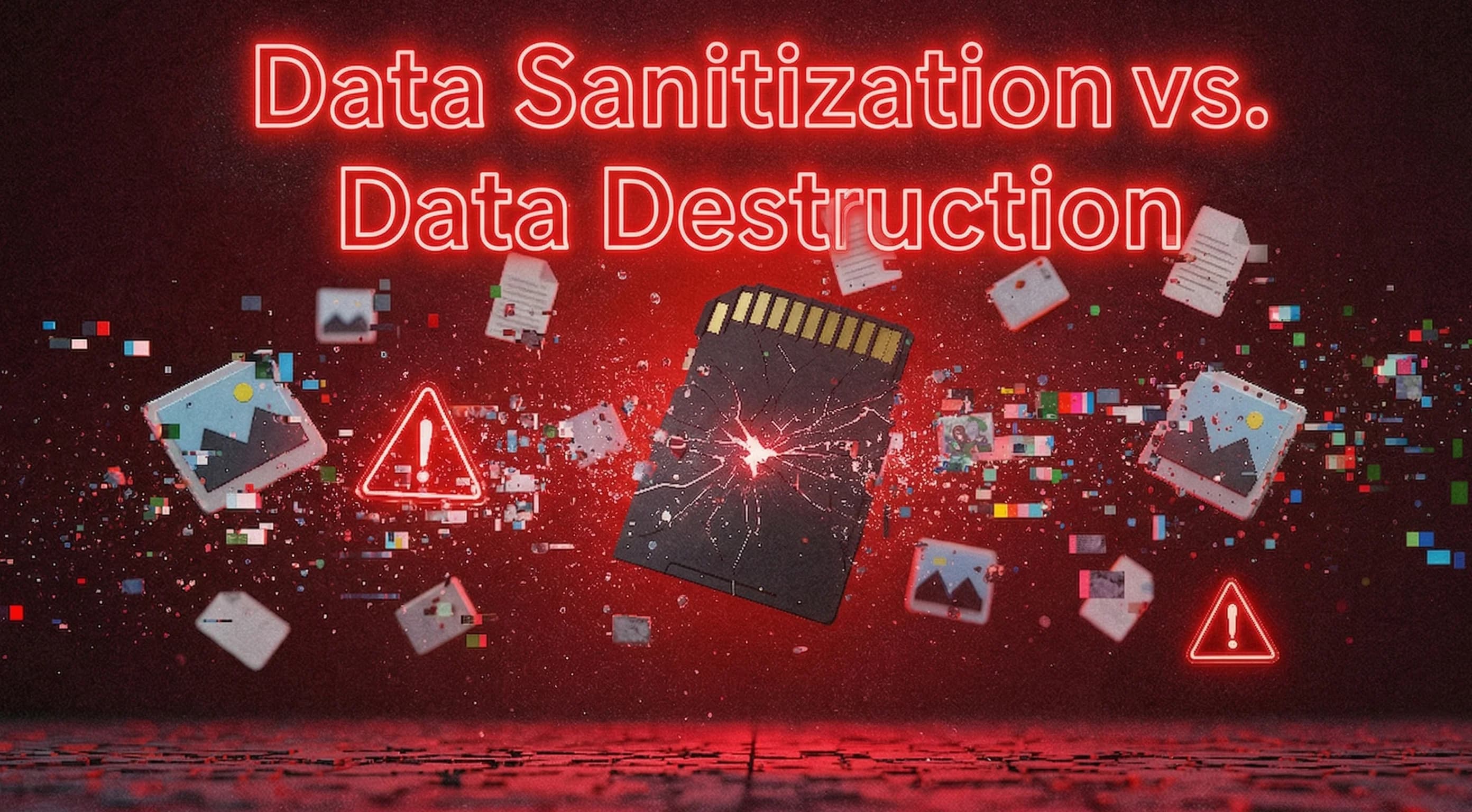
Data Sanitization vs. Data Destruction: Protecting Your Company’s Confidential Information Before Recycling

Old laptops gathering dust in storage rooms, retired servers tucked away in IT closets, and piles of unused hard drives often seem harmless. But beneath that layer of neglect lies a serious risk: these devices can still contain sensitive business data, from customer information to financial records. Many organizations assume that once a device is no longer in use, the data is no longer a concern. In reality, improperly handled IT assets can become an easy entry point for data breaches if they are recycled or resold without proper security measures. This is where understanding data sanitization vs. data destruction becomes critical. Both methods are designed to protect confidential information, yet they serve different purposes depending on your business needs. Knowing the difference between secure data disposal methods is essential for keeping your company’s information safe while responsibly managing old devices.
What is Data Sanitization and Why Does It Matter for Secure Data Disposal?
Data sanitization is a secure data disposal method used to permanently remove sensitive information from storage devices while keeping the hardware usable. It plays a crucial role in IT asset disposal security, especially for businesses that want to reuse, resell, or donate their old devices without risking data exposure. Instead of damaging the device, data sanitization relies on proven techniques such as data wiping and cryptographic erasure. When performed using certified and standards-compliant methods, these processes ensure that data cannot be recovered, even with advanced recovery tools. In some cases, degaussing may also be used to remove data through magnetic disruption. However, this process can render storage devices unusable, depending on the media type. Because of its effectiveness, data sanitization is widely adopted as a standard for secure data erasure across industries. For organizations aiming to balance security with sustainability, data sanitization is an ideal solution. It helps reduce e-waste while maintaining compliance with data protection standards, making it a preferred choice for modern businesses.
What is Data Destruction, and When Should You Use It?
Data destruction is the process of eliminating data by physically destroying the storage device. This method provides the highest level of data security by making it impossible to recover any information. Companies handling highly sensitive or regulated data often rely on data destruction methods such as hard drive shredding, crushing, and incineration. These techniques are especially important for industries that must meet strict compliance and regulatory requirements. While secure data destruction offers maximum protection, it also means the device cannot be reused or resold. This can increase costs and contribute to electronic waste. However, for businesses where data breaches are not an option, data destruction remains the most reliable form of secure data disposal.
Data Sanitization vs. Data Destruction: Key Differences
The difference between data sanitization and data destruction comes down to whether the storage device is reused or permanently destroyed. Data sanitization focuses on removing sensitive information while keeping the device functional. This makes it a cost-effective and environmentally responsible option for businesses looking to extend the lifecycle of their IT assets. In contrast, data destruction involves physically damaging the device through methods like shredding, crushing, or incineration. These approaches ensure complete and irreversible data removal, offering the highest level of security. The right choice depends on your organization’s needs. Businesses handling general operational data may opt for data sanitization, while sectors like healthcare, finance, and government often require data destruction to meet strict compliance standards and eliminate all risks.
Why Secure Data Disposal is Critical Before Recycling
Simply deleting files or formatting a drive does not guarantee secure data erasure. In many cases, data can still be recovered using basic recovery tools, making improper disposal a serious security risk.
Failure to implement proper IT asset disposal practices can result in:
- Exposure of sensitive customer or employee data
- Legal and financial penalties due to non-compliance
- Long-term damage to brand reputation and trust
By using reliable methods such as data sanitization or data destruction, businesses can ensure that confidential information is permanently removed. These steps not only protect your organization but also support compliance with global data protection standards.
Choosing the Right Data Disposal Method for Your Business
Choosing between data sanitization and data destruction depends on multiple factors, including data sensitivity, compliance requirements, and whether the device will be reused. If your organization plans to reuse, resell, or donate IT equipment, data sanitization is often the better option. Techniques like data wiping and cryptographic erasure allow secure data removal while keeping the device functional, supporting both cost efficiency and sustainability. On the other hand, if your business deals with highly confidential or regulated information, data destruction is the safer choice. Physical destruction methods ensure complete and irreversible removal of data, leaving no possibility of recovery. Every organization should align its data disposal strategy with its actual risk level rather than relying on a one-size-fits-all approach.
Best Practices for Secure Data Disposal
A strong data disposal strategy goes beyond choosing between sanitization and destruction. It requires a consistent and well-defined approach across the entire organization. Start by creating a clear internal policy that defines how outdated IT assets should be handled. Every device—whether it’s a laptop, server, or external drive—should go through a verified data sanitization or destruction process before leaving your control. Working with certified vendors adds an extra layer of protection. Proper documentation, such as certificates of data erasure or destruction, helps maintain compliance and accountability. At the same time, training employees on safe data handling practices reduces the risk of human error. Consistency is key. Every device should be treated as a potential data risk, ensuring that security remains a priority throughout the IT lifecycle.
Final Thoughts
Managing outdated IT assets is more than just routine cleanup—it’s a critical step in protecting your business from hidden risks. Every old laptop, server, or hard drive may still contain valuable and sensitive information, making secure data disposal an essential part of your overall data security strategy. Understanding the difference between data sanitization and data destruction helps businesses make informed decisions based on their specific needs. While data sanitization allows you to securely erase data and extend the life of your devices, data destruction ensures the complete and irreversible removal of highly sensitive information. A well-defined process that includes proper data handling, verified disposal methods, and compliance with industry standards not only protects your organization from data breaches but also strengthens trust and accountability. At the same time, choosing the right approach supports environmental responsibility by reducing unnecessary e-waste wherever possible. In the end, protecting data doesn’t stop when a device is no longer in use. Whether you choose sanitization or destruction, the goal remains the same—ensuring that sensitive information never falls into the wrong hands.