Electronic Waste Management Solutions: Turning Old Devices Into Valuable Resources

Electronic waste management has become a critical priority as technology continues to evolve at a rapid pace. From smartphones and laptops to televisions and household appliances, millions of electronic devices are replaced every year—leaving behind a growing volume of discarded equipment. Without proper handling, this e-waste can harm ecosystems, contaminate water sources, and pose serious health risks. That’s why responsible electronic waste recycling is more important than ever. By safely collecting and processing old electronics, we can recover valuable materials, mitigate environmental damage, and contribute to a more sustainable future. Let’s explore how effective e-waste solutions are transforming yesterday’s devices into tomorrow’s valuable resources.
What Is Electronic Waste Management and Why It Matters
Electronic waste management is the structured process of collecting, treating, recycling, and safely disposing of unwanted electrical and electronic devices. This includes everyday items like smartphones, laptops, televisions, printers, and home appliances. Often referred to as e-waste, these discarded products contain valuable materials such as copper, gold, and aluminum—along with harmful substances like lead, mercury, and cadmium. Improper handling or dumping of e-waste can release toxic chemicals into soil and water, damaging ecosystems and creating serious health risks.
Proper electronic waste recycling helps:
- Safely dispose of hazardous components
- Recover precious metals and reusable materials
- Reduce pressure on landfills
- Conserve natural resources
- Lower carbon emissions
In simple terms, responsible e-waste handling protects the environment while turning discarded devices into valuable resources—making electronic waste management a smart choice for both the planet and the economy.
Why Electronic Waste Recycling Matters
Every year, millions of tons of electronic waste are generated worldwide—and this number continues to grow as technology advances. Much of this e-waste still ends up in landfills or is handled by informal sectors, where unsafe recycling practices harm both people and the environment. Electronic waste recycling offers a sustainable solution—turning waste into valuable resources instead of environmental hazards.
Key Benefits of E-Waste Recycling :
1. Recovering Valuable Resources
Old devices contain precious metals like gold, silver, copper, and rare earth elements. Proper recycling allows these materials to be recovered and reused, reducing the need for new mining and preserving natural resources.
2. Protecting the Environment
Certified recycling processes prevent toxic substances from leaking into soil and water. Effective electronic waste management also helps reduce air pollution and keeps harmful chemicals out of ecosystems.
3. Saving Energy
Manufacturing metals from recycled materials uses far less energy than producing them from raw ores, helping lower carbon emissions and support climate goals.
4. Creating Jobs and Economic Value
Formal e-waste recycling industries create employment in collection, dismantling, processing, and refurbishment—supporting local economies while promoting sustainability.
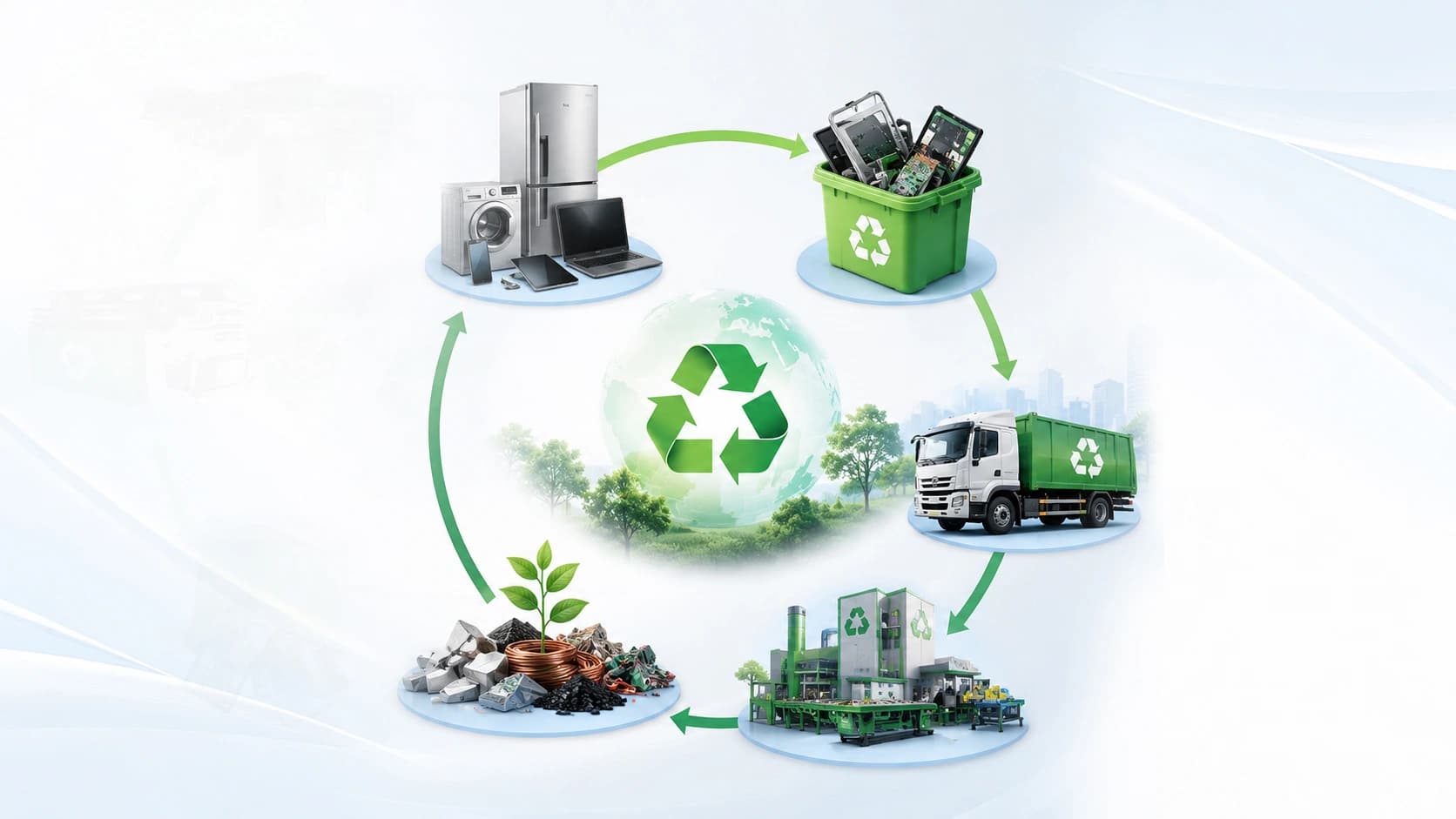
By choosing authorized recyclers and following proper electronic waste management practices, individuals and businesses contribute to a circular economy—where old electronics are responsibly recycled and given a second life.
E-Waste Management in India: Challenges and Progress
With rapid urban growth and increasing dependence on technology, e-waste management in India has become a major environmental concern. From smartphones and laptops to large household appliances, electronic consumption is rising sharply—placing India among the world’s largest generators of e-waste.
Current Landscape
To address this growing issue, the Indian government introduced the E-Waste Management Rules, which aim to improve electronic waste management across the country. These regulations focus on:
-
Extended Producer Responsibility (EPR), making manufacturers accountable for end-of-life products
-
Authorization of formal recycling facilities
-
Consumer awareness initiatives
-
Environmentally responsible electronic waste recycling practices
While these steps mark progress, a large share of e-waste is still processed by informal sectors, where unsafe handling methods expose workers to harmful substances and lead to environmental pollution.
The Way Forward
Strengthening e-waste management in India requires coordinated efforts from government, businesses, and citizens alike. Key priorities include:
-
Increasing public awareness about responsible disposal
-
Stronger enforcement of existing regulations
-
Implement proper documentation and version control
-
Expanding access to proper recycling infrastructure
-
Encouraging corporate accountability and compliance
-
Supporting the growth of formal electronic waste recycling systems
With consistent action and shared responsibility, India can transform its e-waste challenge into a sustainable solution—protecting public health, conserving resources, and building a cleaner future.
How Bharat Recycling Transforms E-Waste into Valuable Resources
Electronic waste is often called an “urban mine” because discarded electronics contain higher concentrations of valuable metals than natural ores. At Bharat Recycling, we follow end-to-end, authorized recycling practices to ensure that old devices are safely dismantled and processed.
- Metals are extracted and refined
- Plastics are reprocessed into new products
- Working components are refurbished for reuse
- Hazardous substances are treated safely
By turning waste into usable raw materials, we reduce reliance on virgin resources, lower energy consumption, and support a sustainable, circular economy—proving that yesterday’s devices still hold real value for tomorrow.
How Individuals and Businesses Can Help
Effective e-waste management isn’t just the responsibility of governments and recycling organizations—it starts with all of us. Every choice we make, from how we dispose of old gadgets to what products we buy, plays a role in reducing e-waste and protecting the environment.
For Individuals
-
Avoid throwing electronics in regular household trash
-
Repair, reuse, or donate devices that still work
-
Choose authorized e-waste recycling near me when discarding old electronics
-
Purchase durable and energy-efficient products to minimize frequent upgrades
For Businesses
-
Implement clear e-waste disposal and compliance policies
-
Follow Extended Producer Responsibility (EPR) guidelines
-
Support formal recycling systems
-
Encourage employee awareness and sustainability programs
When individuals and businesses take responsibility together, small steps create collective impact, helping establish safer e-waste management practices and a sustainable future.
Final Thoughts
Electronic waste is one of the fastest-growing waste streams worldwide, but it doesn’t have to become an environmental crisis. With responsible electronic waste management and recycling, we can recover valuable materials, reduce pollution, and protect natural ecosystems for future generations. Old electronics aren’t just waste—they’re valuable resources waiting to be reclaimed. By making thoughtful choices today, we can build a cleaner, more sustainable tomorrow. Partnering with authorized recyclers like Bharat Recycling ensures that your e-waste is handled responsibly, supporting a circular economy while keeping harmful materials out of landfills.