What Is Refurbishment? A Complete Guide to IT Equipment Refurbishment

Every year, thousands of laptops, desktops, and servers are retired by Indian businesses long before they actually stop working. Most are upgraded, not broken. So what happens to them next is one of the most overlooked decisions in IT asset management — and it usually comes down to one word: refurbishment. If you have ever come across a refurbished laptop listing, wondered how companies recover value from old IT hardware, or researched how enterprises retire equipment responsibly, this guide answers the question properly: what is refurbishment, how does it work, and why is it becoming central to IT asset lifecycle management across India.
What Is Refurbishment?
Refurbishment is the structured process of inspecting, repairing, cleaning, and restoring used electronic equipment — such as laptops, desktops, servers, and networking hardware — so it meets a defined standard of performance and can be reused safely. It is different from simply reselling something "as-is." A refurbished device has been tested, had faulty components repaired or replaced, had its data securely wiped, and been quality-checked before it goes back into use.
In short, refurbishment gives functional electronic equipment a second working life instead of letting it sit idle, get discarded prematurely, or end up as e-waste.
This matters more than most people realise. Industry data on India's electronics sector shows that refurbishment, along with Product-as-a-Service and circular design, remains in an early stage of adoption, even though the technical and financial potential is significant. That gap is exactly why understanding refurbishment — and choosing the right refurbishment partner — matters for any organisation managing IT assets at scale.
Refurbished vs. Used vs. New: What's the Real Difference?
This is one of the most common points of confusion, whether you're an individual buyer or a corporate IT manager.
-
New equipment has never been used or opened.
-
Used (or "as-is") equipment is sold exactly as it was returned — no testing, no repairs, no guarantees.
-
Refurbished equipment has gone through inspection, repair, data sanitization, and quality testing before resale or redeployment, typically backed by some form of warranty or condition grading.
The key differentiator is process and accountability. A refurbishment provider takes responsibility for verifying that the device actually works as claimed — which is exactly why refurbished laptops and computers are considered a safer, more reliable middle ground between buying new and buying used.
How IT Equipment Refurbishment Actually Works
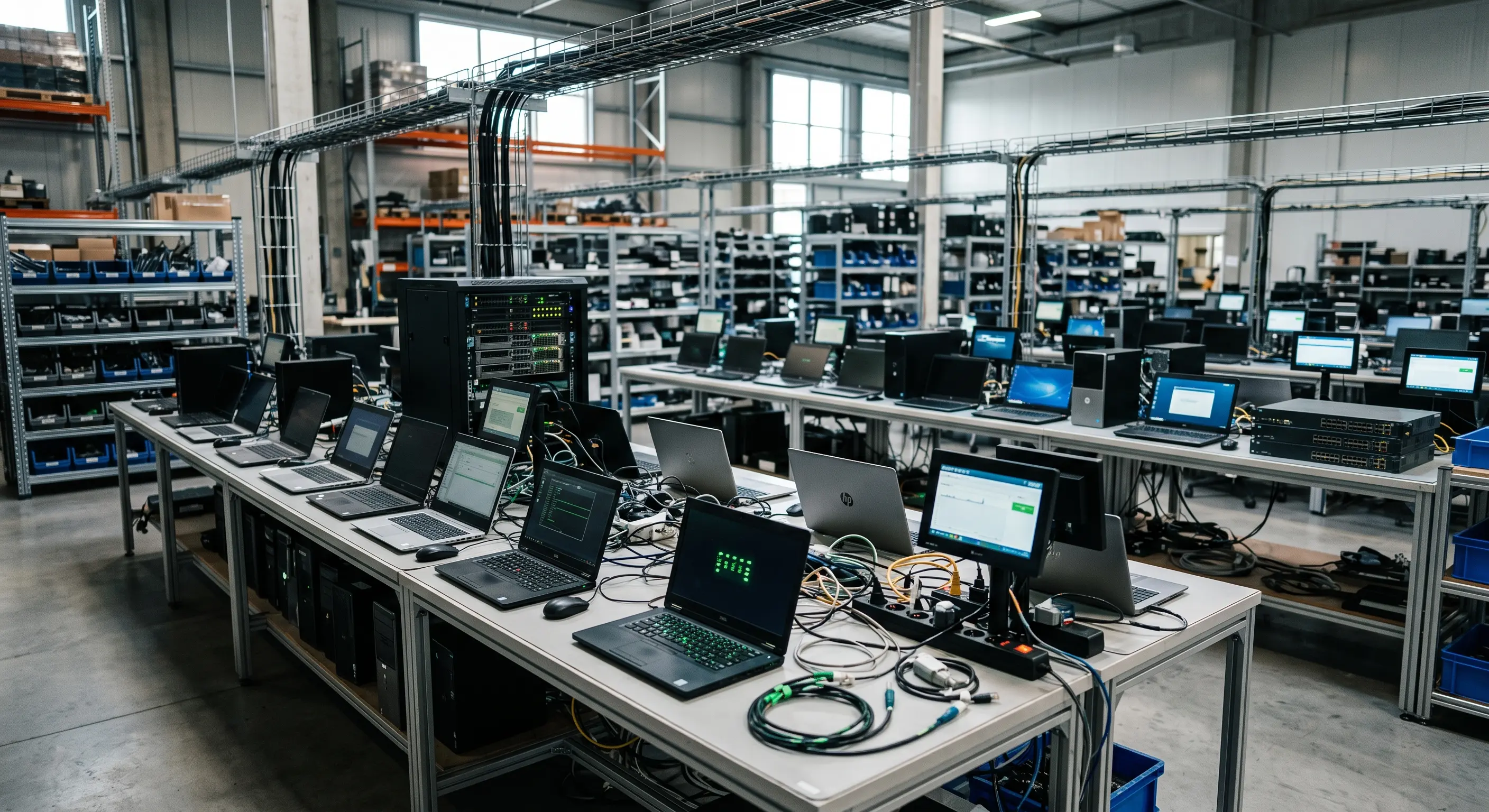
Professional IT equipment refurbishment isn't a single step — it's a sequence of checks designed to restore both function and trust in a device. A standard computer refurbishment services workflow looks like this:
-
Asset assessment and grading – Every unit is inspected and categorised based on physical condition, performance, and reuse potential.
-
Secure data sanitization – Before any repair work begins, all data-bearing components are wiped using certified data destruction methods, eliminating any risk of residual business or personal data.
-
Functional testing and repair – Hardware components (RAM, storage, battery, display, ports) are tested individually, and faulty parts are repaired or replaced.
-
Quality control and reconditioning – The unit is cleaned, cosmetically reconditioned, and re-tested against quality benchmarks.
-
Documentation and reporting – A structured report records what was tested, replaced, and verified — giving businesses an auditable record of the refurbishment outcome.
This is the same structured approach behind Bharat Recycling's Refurbishment & Reuse Solutions, which combines asset grading, secure data wiping, functional repair, and detailed reporting for enterprises retiring IT hardware at scale.
Why Refurbished Laptops and Computers Make Sense
For individual buyers and IT procurement teams alike, refurbished laptops and computers solve a very practical problem: getting reliable performance without paying full price for new hardware.
-
Lower cost, same capability – Refurbished devices typically cost significantly less than new equivalents while still meeting performance benchmarks for everyday business or personal use.
-
Tested reliability – Unlike used devices sold as-is, refurbished units are diagnostically verified before resale.
-
Reduced environmental impact – Every laptop kept in circulation through refurbishment is one less device manufactured from scratch — and one less unit entering the waste stream prematurely.
-
Faster deployment for businesses – Organisations refreshing large fleets of laptops or desktops can redeploy refurbished units internally instead of waiting on new procurement cycles.
This is precisely why laptop refurbishment services and laptop refurbishing have grown into a distinct category within India's broader electronics and IT services industry — not a fallback option, but a legitimate procurement and sustainability strategy.
Refurbishment and the Circular Economy
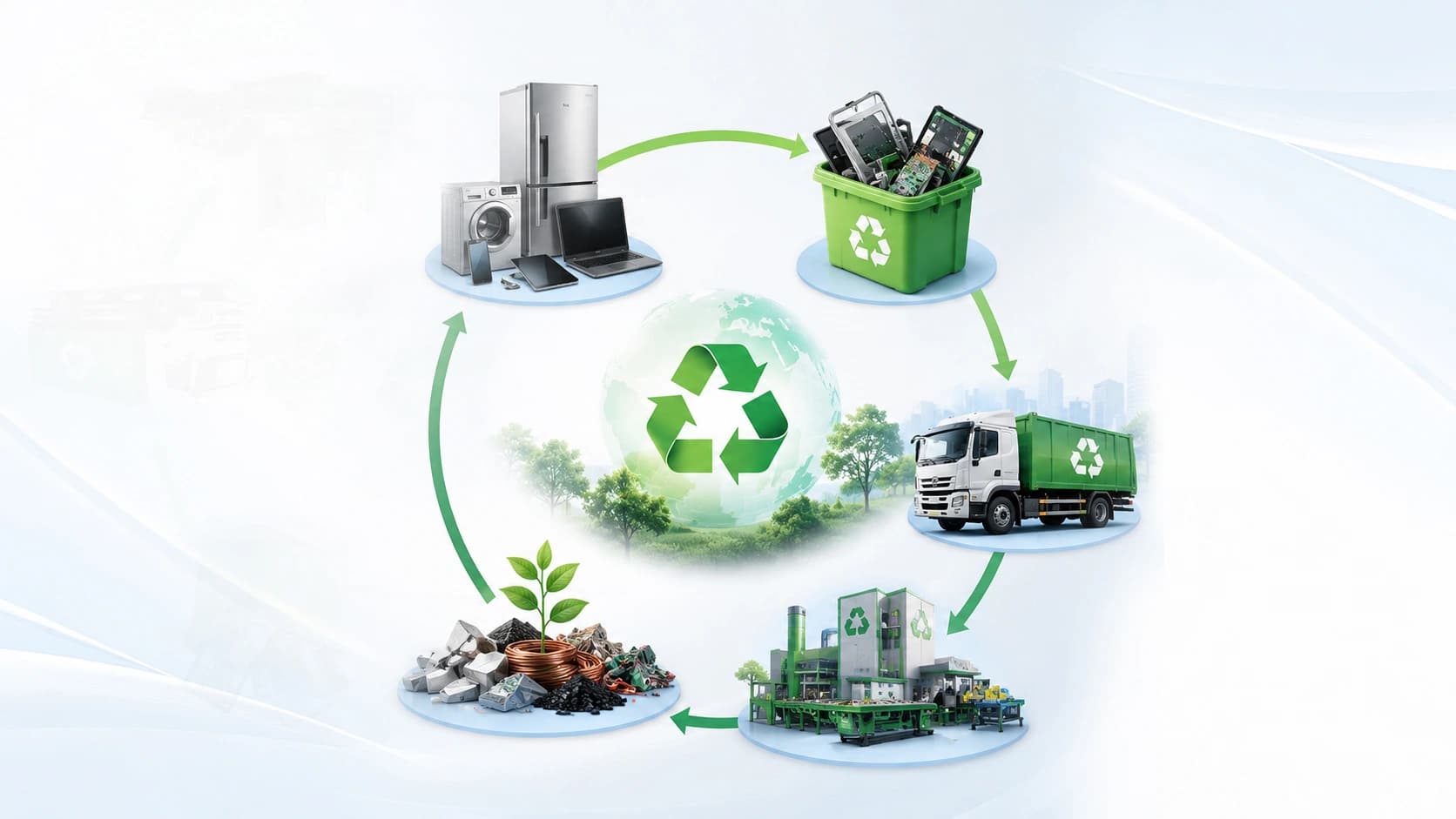
Refurbishment is one of the clearest, most measurable ways a business can participate in the circular economy for electronics. Instead of the traditional "use and discard" model, refurbishment keeps devices, components, and materials in active use for longer — reducing the demand for new raw material extraction and manufacturing.
Researchers studying circular strategies in electronics often reference the "R-strategies" framework, which identifies ten approaches — refuse, rethink, reduce, reuse, repair, refurbish, remanufacture, repurpose, recycle, and recover — as the building blocks of circularity in the electronics sector. Refurbishment sits right in the middle of that framework: more impactful than simple reuse, and far more resource-efficient than recycling raw materials from scratch.
At a national level, this shift is already underway. India's transition toward circular electronics is being actively supported through programmes backed by the Global Environment Facility and the United Nations Development Programme, working alongside India's Ministry of Electronics and Information Technology to strengthen e-waste management and circular business models. Refurbishment-led IT asset management is a practical, business-level extension of that same national direction.
IT Asset Lifecycle Management: Where Refurbishment Fits
For enterprises, refurbishment isn't a standalone activity — it's a stage within a broader IT asset lifecycle management (ITALM) strategy. A typical ITALM framework includes:
-
Planning – Defining IT needs and sustainability goals
-
Acquisition – Procuring assets with durability and reuse potential in mind
-
Deployment and use – Integrating assets into daily operations
-
Maintenance – Extending usable life through servicing and upgrades
-
Retirement and disposal – Secure data destruction followed by reuse, refurbishment, or certified recycling
Refurbishment becomes critical at the retirement stage. Rather than treating "end of use" as "end of life," a structured refurbishment program lets organisations recover residual value, redeploy functional assets internally, or responsibly channel them into secondary markets — before recycling is even considered.
This staged approach also aligns with how modern IT Asset Disposition (ITAD) strategies are built. A well-run programme treats refurbishing and redeploying assets as a way to stretch IT budgets without compromising performance, while strengthening regulatory compliance and brand reputation at the same time.
The Business Case for Electronic Refurbishment
Beyond sustainability, refurbishment has a direct financial and operational impact for businesses managing IT fleets:
| Benefit | Impact |
|---|---|
| Cost optimisation | Recovers residual value from functional assets instead of writing them off |
| Reduced procurement spend | Refurbished / redeployed units lower the need for fresh purchases |
| Regulatory compliance | Supports adherence to India's E-Waste Management Rules |
| ESG and sustainability reporting | Demonstrates measurable circular-economy action |
| Data security | Pairs refurbishment with certified data sanitization to eliminate breach risk |
This is also why electronic refurbishment is increasingly bundled with secure data destruction and reverse logistics as part of a single managed service — rather than treated as separate vendors and separate processes.
Choosing a Computer Refurbishment Services Partner
If your organisation is evaluating laptop refurbishment services or a broader refurbishment partner, a few non-negotiables matter:
-
Certified data sanitization before any repair work begins — non-negotiable for businesses handling sensitive data
-
Transparent asset grading and reporting — you should know exactly what was tested, repaired, and verified
-
Compliance documentation — proper handling under India's e-waste and EPR regulations
-
Integrated logistics — secure pickup and chain-of-custody tracking, especially for multi-location asset retrieval
-
Proven capability across asset types — laptops, desktops, servers, and networking equipment, not just consumer devices
Bharat Recycling's Refurbishment & Reuse Solutions are built around exactly this structure — asset evaluation and grading, secure data sanitization, functional testing and repair, quality reconditioning, and full reporting — integrated with the company's wider IT Asset Disposal (ITAD) and secure data destruction services.
Final Thoughts
Refurbishment answers a simple but important question: what should happen to electronic equipment that still works, but is no longer the newest option? Instead of discarding it, refurbishment restores, verifies, and redeploys it — recovering value for businesses, extending the life of usable devices, and reducing the pressure on India's growing e-waste stream.
As IT asset lifecycle management matures across Indian enterprises, refurbishment is shifting from an afterthought to a core strategy — one that sits alongside recycling, data security, and compliance as a pillar of responsible electronics management.
Looking to set up a structured refurbishment programme for your organisation's IT assets? Talk to Bharat Recycling's refurbishment team about secure data wiping, asset grading, and value recovery for your laptops, desktops, and enterprise hardware.